

Why Air Matters More Than We Think
There are certain spaces you remember without trying, not because of how they looked, but because of how they felt.
For us, this became clear during a winter when all of us were waking up the same way. Stuffy, slightly run down, never fully rested. Nothing obvious was wrong. We tested for mold, checked everything we could think of, and it all came back clean.
It turned out to be the air.
It wasn't moving the way it should. Too still in some places, too dry in others. Once we adjusted that, the shift was immediate. Sleep improved. The space felt lighter. Nothing visual changed, but the experience of being there did.
There have been moments where this becomes obvious in a different way.
Walking into a hotel for work and recognizing it before even looking up. Not the layout. The air.
The W Hotels does this intentionally. The scent, how it moves through the space, how it lingers just enough. It's designed to shape how you feel when you arrive and what you remember when you leave.
Or something simpler.
The volcano candle in Anthropologie. You smell it and you know exactly where you are.
People don't always think about air this way, but they recognize it immediately when it's done well.
There is science behind this, even if we don't name it. Air carries everything. Humidity, particles, scent. The body is constantly reading it, adjusting without us realizing. When it's off, you feel it. When it's right, you settle.
This is where architecture matters.
How spaces connect, where openings are placed, whether air can actually move through a home or gets trapped in it. These decisions happen early, and they shape how a space feels long before finishes or furniture are added.
When it's working, you don't think about it.
You just feel better. You stay longer. You breathe a little deeper.
This is part of why we think so carefully about volume, ceiling height, circulation, and the way spaces open into one another.
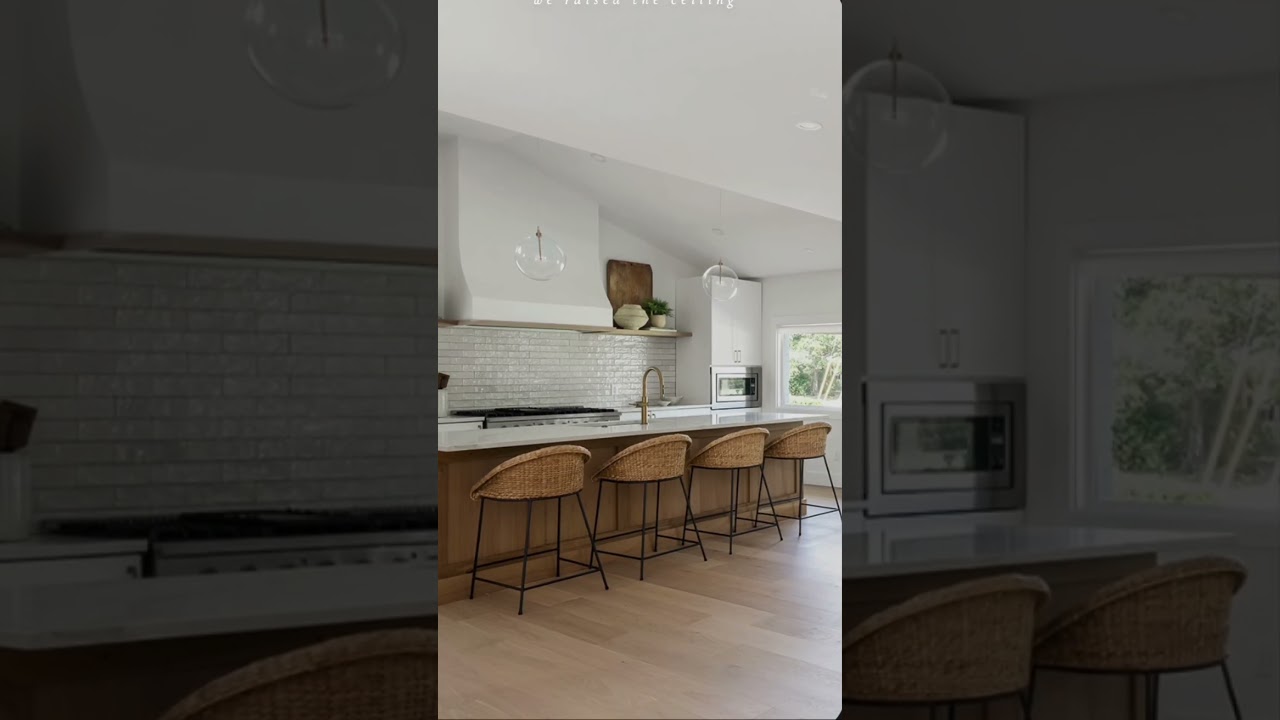
At Woodview, raising the roofline was not simply about making the kitchen look larger. It changed how light moved through the space, how air circulated, and how the room felt physically to spend time in. The openness created a sense of relief the moment you walked in.
These are often the decisions that shape wellbeing most powerfully because they affect the body before we consciously register them.
A home does not need to announce these things loudly to change the experience of being there.
Because how a space looks may draw you in, but how it feels is what makes you stay.
—
KDH
Continue Exploring:
Related Reading
Explore More
Follow Along
- @kensington.designhouse
- If you'd like early access to the spaces and ideas we're building, you're invited to step inside here.