

Why We Live With Materials Before Making Final Decisions
Why We Live With Materials Before Making Final Decisions
One of the first boxes arrived at the studio this week for our Daniel Island project.
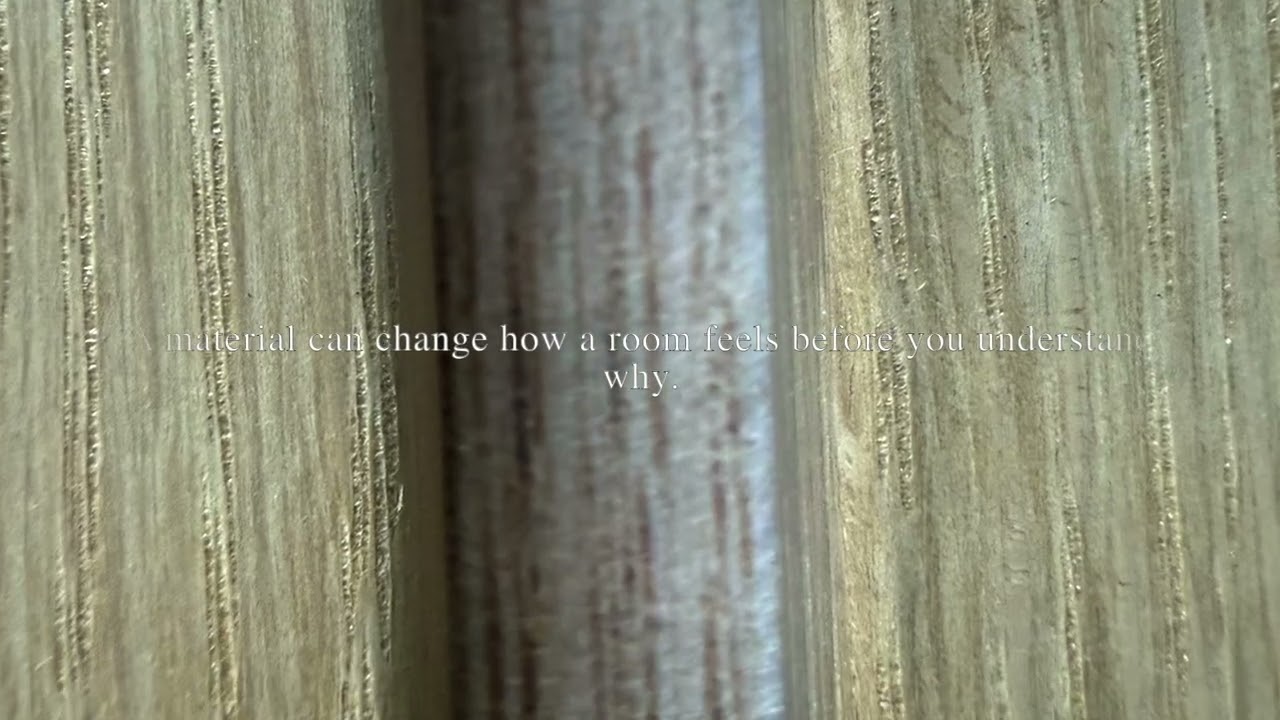
There was no dramatic demolition, no sledgehammers, and no dust. Inside this unassuming cardboard box were simply a few samples of wood paneling we are considering for the wall behind the dining banquette. Just a few pieces of milled wood.
But at Kensington Design, we know that some of the most important decisions in a project happen long before construction begins.
Most people assume materials are chosen purely for how they look on a mood board. We choose them for how they feel in a life.
The Anatomy of a Space
A material changes far more than the aesthetic of a room. It acts as the foundational layer of the environment, fundamentally altering the warmth, the acoustic echo of footsteps, the interplay of shadows, and the overall psychological experience of being in that space. Two completely different materials can serve the exact same function (like covering a wall) but elicit entirely different emotional responses.
This philosophy becomes critical in smaller or architecturally challenging spaces.
Take our Daniel Island project, for example. The dining area has limited natural light, which means every single design decision has to work a little harder. Rather than trying to artificially brighten the space with stark white paint or relying on loud, distracting colors, we are leaning into the intimacy of the room. We are looking at how the organic grain of natural wood can add depth, subtle warmth, and visual interest without creating visual clutter.
Why We Must "Live" With Materials
So, why is it so important to live with a material before giving it the final green light? Because a home is a living, breathing environment, not a static photograph.
Before we specify anything at Kensington Design, we physically live with the samples. Here is why rushing this process is a disservice to the final design:
Light is a Shape-Shifter: What looks like a warm, honeyed oak in the bright midday sun might read as a muddy, heavy brown under the artificial glow of evening lamps. We move samples from room to room. We prop them up and observe them with our morning coffee, and we check them again after the sun goes down.
The Tactile Reality: A home is meant to be touched. We run our hands over the grain. We pay attention to whether a material feels cold and sterile or inviting and grounded.
The Ecosystem of the Room: Materials do not exist in a vacuum. We need the time to lay the wood against flooring samples, drape cabinet fabrics over them, and hold them up to paint swatches to ensure the entire ecosystem of the room hums in harmony.
The Screen Deception: What looks like the perfect texture or tone on a backlit computer screen rarely translates perfectly to physical reality. Living with the tangible object bridges the gap between digital theory and physical truth.
The Unseen Foundation of Good Design
This slow, deliberate part of the design process rarely makes it into our finished portfolio photography. These decisions are made long before construction begins, but they continue to influence the experience of a home long after the project is complete.
Because at Kensington Design, we believe design isn't just about what a room looks like to a guest. It is about how it feels to the people who live there. And sometimes, creating that perfect feeling starts with nothing more than a simple box arriving at the front door.
Related Reading
Explore More
Follow Along
- Follow along as we document the Daniel Island project from early material studies through construction and installation @kensington.designhouse
- If you'd like early access to the spaces and ideas we're building, you're invited to step inside here.